Judge blocks President Trump’s new bid to curb birthright citizenship, citing Supreme Court precedent
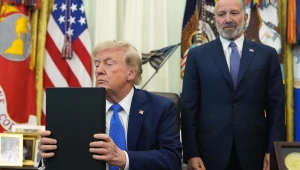
 A federal judge has blocked President Trump's executive order aimed at limiting birthright citizenship.
Summary
A federal judge has blocked President Donald Trump's latest attempt to limit birthright citizenship, granting a preliminary injunction against an executive order that the administration said would target "birth tourism." U.S. District Judge Deborah L. Boardman in Maryland issued the injunction until a class-action lawsuit brought by immigrant families and advocacy groups is resolved. The judge wrote that "the Supreme Court has spoken: Children in the certified class are 'citizens at birth.'" Birthright citizenship is guaranteed under current law for anyone born on U.S. soil, with exceptions. Trump has long wanted to end birthright citizenship, issuing a previous executive order that was struck down by the Supreme Court in June. In August, the president tried again with a narrowed executive order that appeared to restrict automatic citizenship for specific categories of people, including children born to adults with connections to foreign embassies or organizations or to anyone considered an "alien enemy" of the United States. The order defined birth tourism as someone who enters the United States on a "nonimmigrant visa for the purpose of giving birth on American soil." The order sought to deny citizenship to children born to adults who "engaged in a commercial transaction to purchase or access birthright citizenship." Families and organizations who sued over the birthright citizenship restrictions told the court that the executive branch has taken a broad view of who qualifies as an alien enemy, sometimes relying on speculation or misinformation to make that determination. Others said they feared their children would be denied citizenship because a member of the parents' extended family was connected to a gang in their home country, even though the parents were not gang members. The administration's attorneys argued that the request to block the order was premature and said the federal agencies tasked with enforcing it would use "appropriate measures" to do so, relying on official guidance that hasn't been issued yet. The judge rejected that argument, writing that "No matter what the guidance says, the 2026 Executive Order commands agencies to deny citizenship documents to several broad categories of children."
(Source:Chicago Tribune)