Romford - history from settlement to major market town
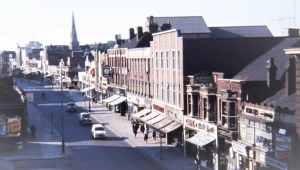
 Romford evolved from a medieval market settlement on a Roman road into a major retail hub on London's outskirts.
Summary
Romford, one of Havering's main towns, has evolved from a medieval market settlement on a Roman road into a major retail hub on the outskirts of London. The name Romford was first recorded in 1177 as 'Romfort', meaning 'wide or spacious ford' and referring to a crossing on the Roman road from London to Colchester over the River Rom. Centuries ago, the river was broader, to the point where a lagoon may have existed where Market Place is today, and the first pre-historic settlement is believed to have been on higher ground behind the library and town hall. The Roman road crossing over the river around 50ft above sea level continued as Romford’s basic form for much of its early history. Records mention the first building in the town centre as the chapel of St Andrew - a predecessor to current St Edward the Confessor Church in Market Place, which replaced it in 1410. By the 13th century, Romford already had an animal and produce market on Wednesdays, a Monday market for calves and an annual fair. From at least the 1600s, a Tuesday market was added for hogs, while a Saturday market was added in the late 19th and early 20th century. The cattle market remained significant until just after the Second World War, finally shutting in 1958 and leaving household items, clothes and food as the only items left being sold. For many years, Romford was made up of a collection of houses and inns around the market, High Street and eastern end of London Road, but the arrival of the station in 1839 rapidly increased the population. It jumped from 5,317 to nearly 14,000 in the 20 years following this, and then to more than 40,000 in the inter-war period. Romford later underwent another period of significant transformation in the late 60s and early 70s, with the demolition of Laurie Hall, the arrival of shops such as C&A and the construction of the ring road and Gallows Corner.
(Source:Romfordrecorder Co Uk)